Platform Compliance Map Resources Team Contact Request a walkthrough

Resources / Reading a Report Card

Guide

How to read your Report Card.

The Report Card is one document a principal can read in about twelve minutes. Here is what each part means, in order, and what to do when a number looks wrong.

Start here

The Trust Score is the one number up top.

A single score from 0 to 100 for the rooftop this month. It folds the two things the audit measures, compliance exposure and operational performance, into one figure a principal can track over time.
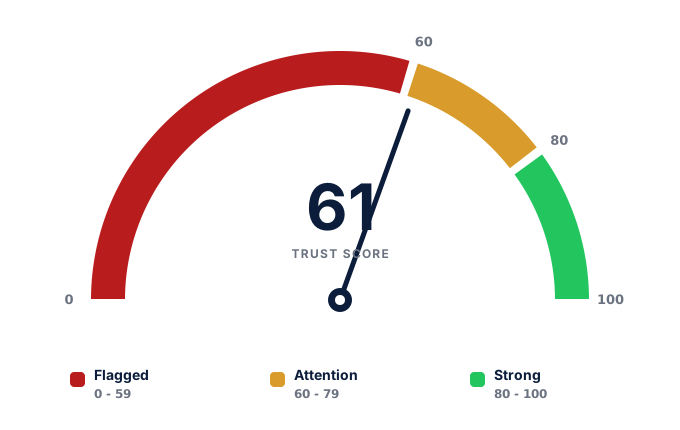
Under 60 is Flagged. A rule was broken or a process gap is costing real money. Open the findings first.
60 to 79 is Attention. The store is mostly sound, with specific soft spots worth fixing this month.
80 and up is Strong. Hold the line and keep an eye on the trend.
A Trust Score gauge from 0 to 100 with three bands: Flagged from 0 to 59 in red, Attention from 60 to 79 in amber, and Strong from 80 to 100 in green, with the needle pointing to 61.

The two figures under the score

One number is risk. The other is money left on the table.

The Trust Score splits into two dollar figures, and they answer different questions for different people in the store.
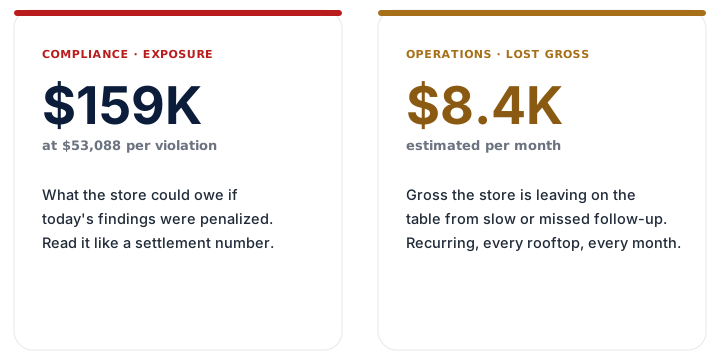
Compliance exposure is the figure a principal reads like a settlement number. It estimates what today's findings could cost at $53,088 per violation, with the exact rule named on each one.
Operations carries a lost-gross figure. It is the recurring revenue the store leaks from slow lead response, missed follow-up, and weak qualification. It gives the GM and the BDC a reason to read the report too.
Read them together. A clean compliance number with a heavy operations number is a healthy store leaving money on the table. The reverse is a profitable store carrying real risk.
Two panels: Compliance exposure showing $159K at $53,088 per violation, and Operations lost gross showing $8.4K per month.

Where the score comes from

Every finding is built the same way.

The score is not a black box. Open any finding and it tells you four things, in plain language, with the proof attached.
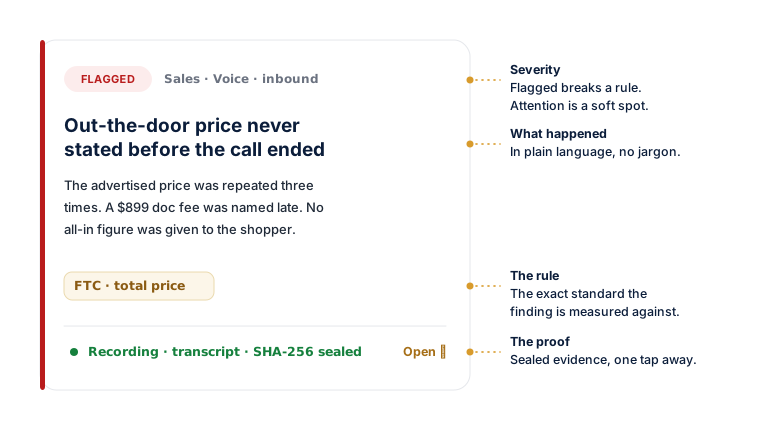
The severity. Flagged means a rule was broken. Attention means a soft spot worth watching.
What happened, written the way one manager would tell another, with no jargon.
The rule it is measured against, named exactly, so there is nothing to argue about.
The proof. The recording, the transcript line that broke the rule, and a sealed hash, one tap away.
An annotated finding card labeling its four parts: the severity chip, the plain-language description, the rule cited, and the sealed evidence.

The line that matters most

Watch the direction, not just the number.

A single score can look rough in the first month. What tells you the store is working is the line moving the right way over time.
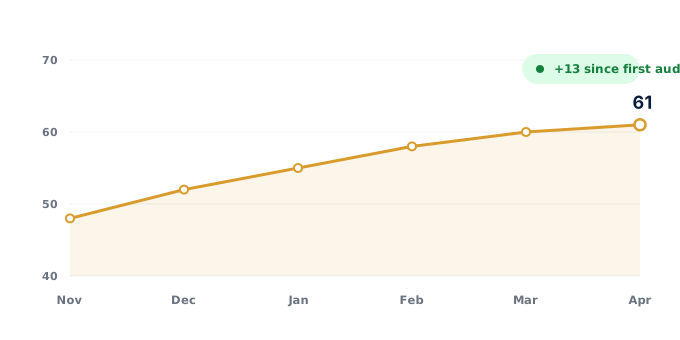
The trend compares this month to every month before it, since the first audit.
A rising line means the fixes are landing on the floor, not just in a meeting.
A flat or falling line on a good score is the early warning worth acting on.
A line chart of the Trust Score rising from 48 to 61 over six months, with a plus 13 since first audit badge.

Your first month

What to do when the first Report Card lands.

The point of the Report Card is the loop it starts, not the grade it gives.

01

Read the top

The Trust Score and the two figures are the whole story in ninety seconds. Start there before anything else.

02

Confirm one

Open the Flagged findings first, listen to a single recording, and confirm it for yourself. The evidence is right there.

03

Assign and watch

Pick the two or three that matter, assign them, and watch next month's trend. That is the loop.

See a Report Card in a walkthrough.

A walkthrough covers the Trust Score, an open finding with its evidence, and a full sample Report Card for a rooftop.